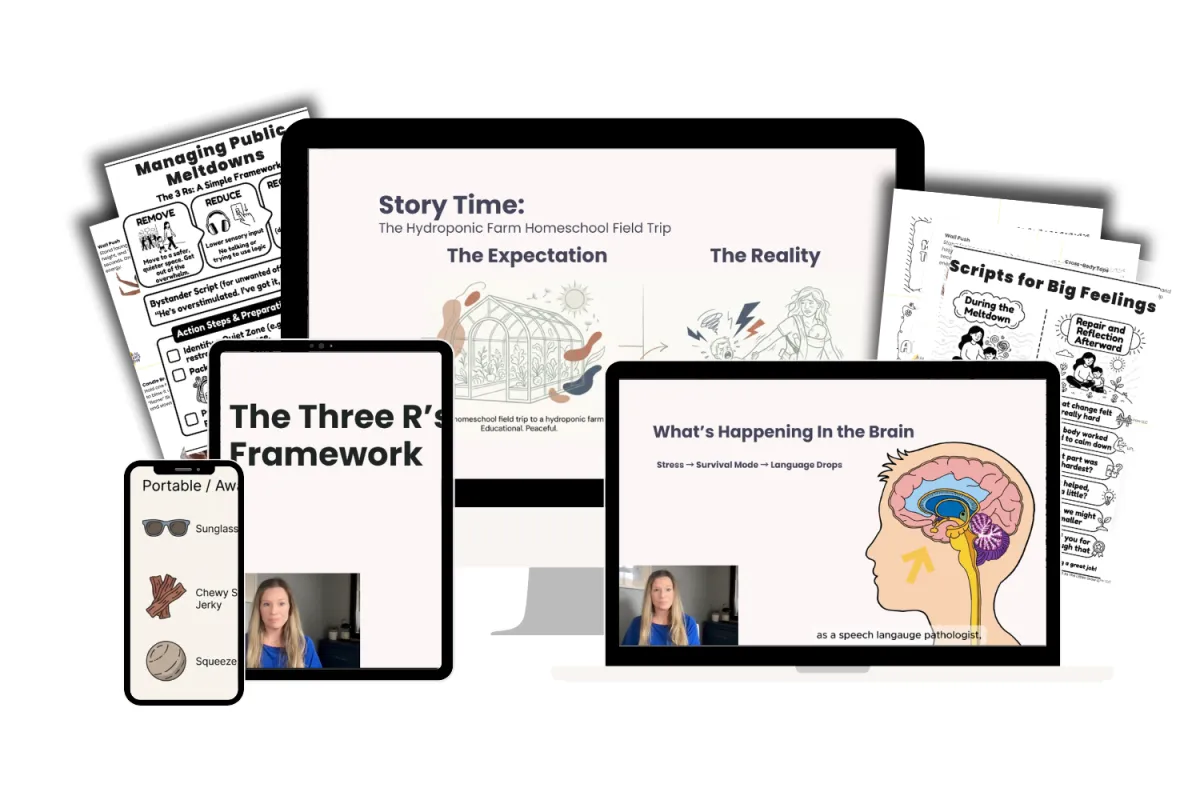
Managing Public Meltdowns: The Quick Recovery System
This system reveals what your sensitive child's meltdown is actually trying to tell you, and exactly what to do in the moment so you can both recover fast, even in the middle of a store with people watching.
Today's Price: $17
What's Included:
How to tell in about five seconds whether you are looking at a tantrum or a meltdown
These two look nearly identical from the outside and they need opposite responses.
What is actually happening in your child's brain when they hit that point
Once you can picture it, "why won't they just listen" stops being the question, because you can see that listening is temporarily offline.
How to read the behavior as communication instead of defiance
Your child is telling you something specific. This shows you how to hear it in the moment, not three hours later in the car.
How to find the real trigger, which is almost never the thing that happened right before it
The dropped cracker was the last straw, not the cause. This walks you back through the load that was already there.
The 3 R Framework for the moment it is happening
A sequence you can actually run in a crowded aisle with a cart and an audience. Same three steps, same order, every time.
How to spot the yellow zone before it goes red
The early signals are quiet and easy to miss. Once you know yours, a lot of these never fully arrive.
The daily habits that build your child's nervous system capacity
Small, unglamorous, and they change how much your child can carry before the day tips over.
Exactly what to do after the storm: reflect, repair, reconnect
The part most of us skip because we are exhausted. It is also the part that makes the next meltdown shorter.
Clear guidance on how to use this whether your child is two or nine, highly sensitive, autistic, ADHD, or simply having a hard season
The nervous system principles are the same for every child. This shows you how to adjust the delivery for yours.
This system is built so you can walk into your very next hard moment with a plan you can run in under 60 seconds.
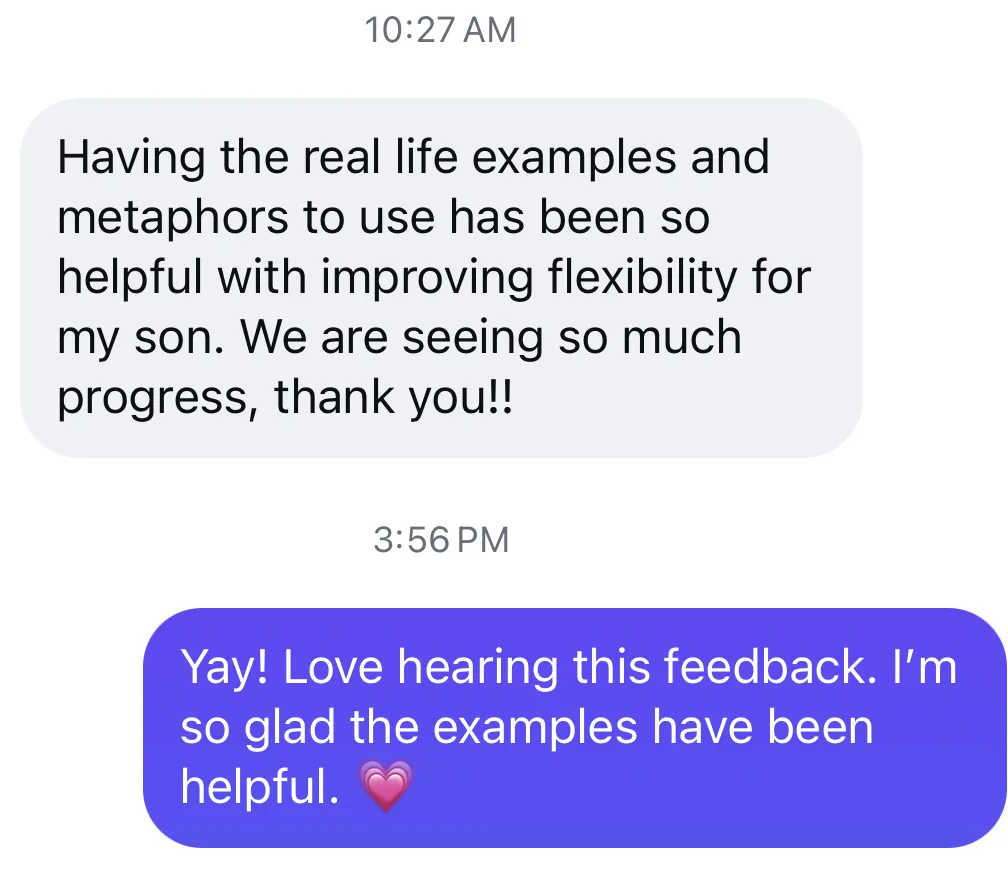

Note: Managing Public Meltdowns: The Quick Recovery System is an educational resource created by Kelsey, a licensed speech-language pathologist. It is general parent education. It is not therapy, not an evaluation, and not individualized clinical advice, and it is not a substitute for care from a professional who has personally assessed your child. Every child is different and every family's experience will be different, so no specific outcome is promised. If you have questions or concerns about your child's development, communication, or wellbeing, please talk with your pediatrician or a qualified provider who can assess your child directly. Any testimonials, results, or examples shared represent individual experiences and are not guarantees. Due to the digital nature of this program, all sales are final and no refunds are offered.